Problem
Many workplaces unintentionally create barriers for neurodivergent individuals because organisational systems are designed around a narrow set of working styles. Despite increasing awareness of neurodiversity, most diversity initiatives focus on training or policy changes without providing practical tools to redesign workplace systems.
Existing approaches often fail because they treat neurodiversity as an isolated HR issue rather than a system-wide design challenge. Training programmes may raise awareness but rarely address how communication structures, digital tools, leadership practices, and physical environments interact to shape everyday work.
Individuals also face challenges when seeking support in the workplace. Many hesitate to request adjustments due to stigma or previous negative experiences, while organisations often lack clear frameworks for identifying which changes will have the greatest impact.
As a result, there remains significant untapped potential within the workforce, with neurodivergent individuals experiencing disproportionately high unemployment and underemployment despite possessing valuable skills and perspectives.
Solution
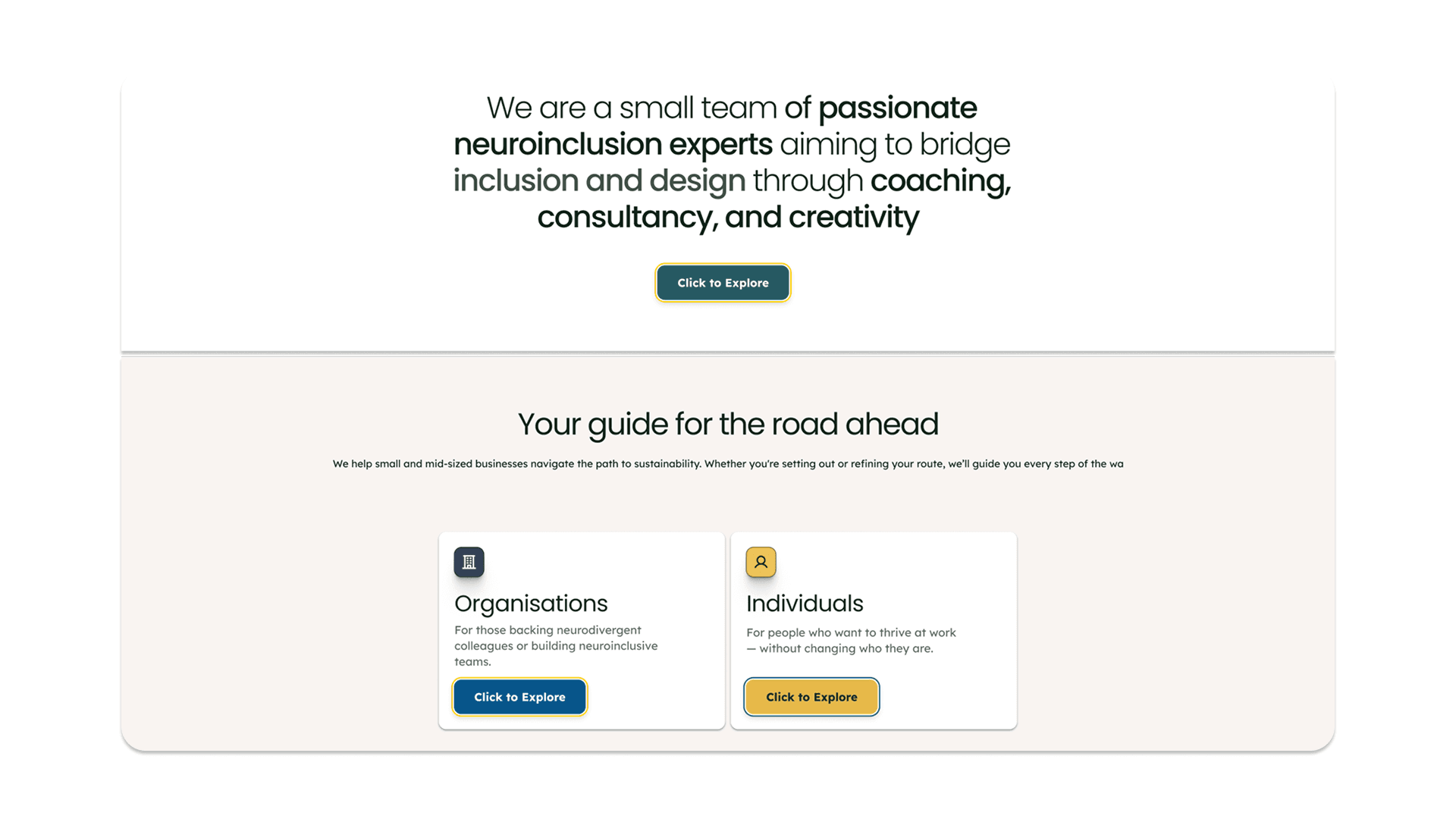
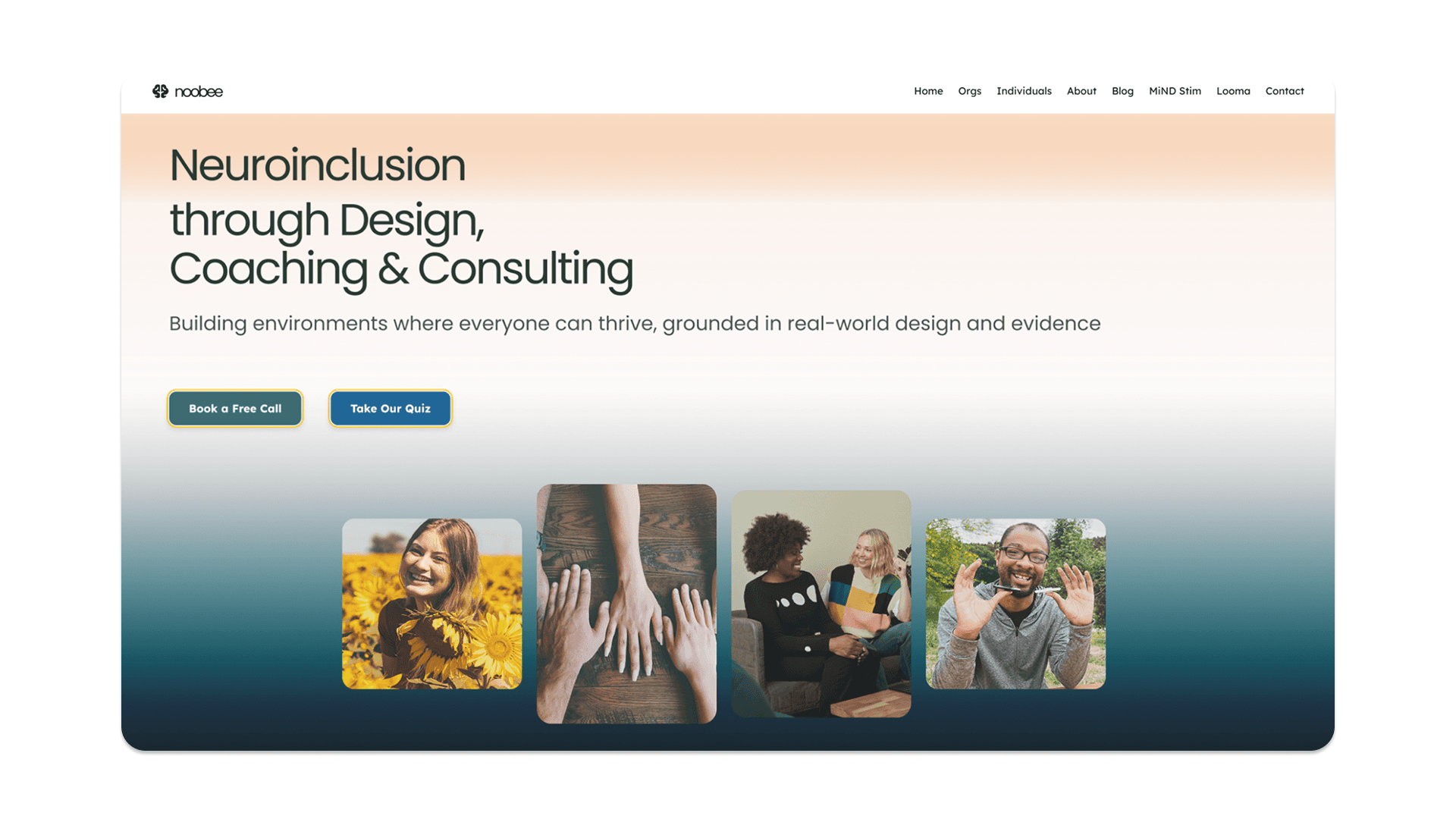
Noobee was designed as a platform that combines research-driven frameworks with practical tools to help individuals and organisations implement neuroinclusive practices.
The core of the platform is a pair of adaptive diagnostic quizzes. One supports individuals by analysing their cognitive preferences across several layers including sensory profile, communication style, executive function, environmental fit, and emotional regulation. The system generates a personalised profile along with practical recommendations, tools, and resources to improve how they navigate work environments.
The organisational diagnostic follows a similar approach but evaluates workplaces across twelve interacting layers, including environment design, leadership practices, communication structures, collaboration patterns, tools and systems, and talent processes. The quiz adapts dynamically based on factors such as industry, company size, work model, and the role of the participant.
Results are visualised through interactive dashboards that highlight strengths, vulnerabilities, and dependencies across organisational systems. This creates a forward-looking audit that organisations can use to prioritise meaningful changes rather than relying on generic training programmes.
Alongside the diagnostic tools, the platform includes coaching services, training workshops, consultancy offerings, a resource hub, and educational content designed to help organisations embed neuroinclusive practices over time.